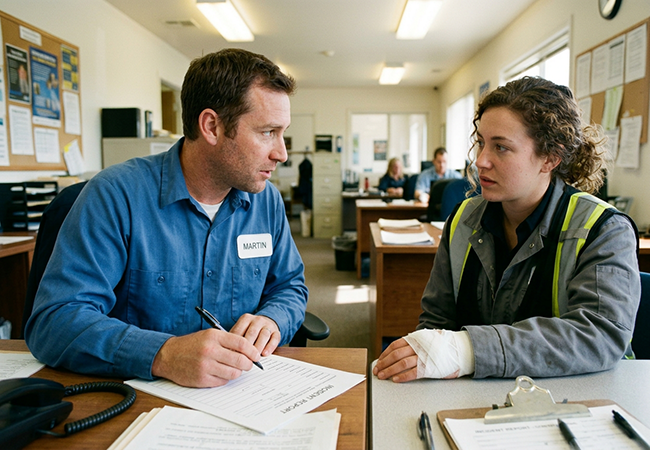
OSHA stands for the Occupational Safety and Health Administration. It is a federal agency under the U.S. Department of Labor that sets and enforces workplace safety standards. OSHA’s mission is simple: make sure workers go home safe at the end of every shift.
Every employer in the United States, with limited exceptions, must follow OSHA rules. Workplace injuries, illnesses, and deaths still happen across nearly every industry, and OSHA is the agency responsible for prevention, inspection, and enforcement. According to the U.S. Bureau of Labor Statistics, millions of nonfatal workplace injuries are reported each year, which makes OSHA compliance a core part of running a business.
Below is a clear explanation of what OSHA is, what it does, who it covers, and what employers must do to stay compliant.
What Does OSHA Stand For?
OSHA stands for the Occupational Safety and Health Administration. It was created by the Occupational Safety and Health Act of 1970, signed into law by President Richard Nixon. The agency began operating in 1971.
Why OSHA Was Created
Before OSHA existed, there was no consistent federal standard for workplace safety. Worker injuries and deaths were widespread, especially in manufacturing, construction, and mining. Congress created OSHA to set national workplace safety regulations and reduce on-the-job injuries, illnesses, and fatalities.
OSHA’s Core Mission
- Set and enforce occupational safety standards
- Provide training, outreach, and education
- Encourage continuous improvement in workplace safety
- Support state-run safety programs
- Protect worker safety rights
What Does OSHA Do?
OSHA carries out its mission through standards, inspections, enforcement, training, and outreach.
1. Sets Workplace Safety Standards
OSHA writes and updates the federal safety agency rules that apply to most U.S. workplaces. Standards cover general industry, construction, maritime, and agriculture. They address hazards such as falls, machinery, chemicals, electrical risk, and respiratory exposure.
2. Conducts Workplace Safety Inspections
OSHA performs safety inspection visits without advance notice. Inspections may be triggered by:
- Imminent danger reports
- Fatalities or severe injuries
- Worker complaints
- Referrals from other agencies
- Targeted programs in high-hazard industries
- Follow-up visits after previous violations
3. Enforces Compliance
When inspectors find violations, OSHA issues citations and may apply safety violation penalties. Penalties scale by severity, ranging from minor record-keeping issues to willful violations that put workers in serious danger.
4. Provides Training and Resources
OSHA offers free workplace safety guidelines, training materials, and on-site consultation programs. Small businesses can request help without triggering an enforcement inspection.
5. Protects Worker Safety Rights
Workers have the right to a safe workplace, to report hazards, and to request an OSHA inspection without retaliation.
Who Is Covered by OSHA?
OSHA covers most private-sector employers and their workers in all 50 states, the District of Columbia, and U.S. territories. Coverage applies through either federal OSHA or an OSHA-approved state plan.
Who OSHA Covers
- Private-sector employers and their employees
- State and local government workers in states with OSHA-approved plans
- Federal agency workers under separate federal OSHA programs
Who OSHA Generally Does Not Cover
- Self-employed individuals with no employees
- Immediate family members of farm employers
- Workers covered by another federal agency, such as the FAA or MSHA
- Public employees in states without an approved state plan
OSHA Standards: The Four Main Categories
OSHA organizes its rules into four major sets of occupational safety standards.
1. General Industry
The largest category. Covers most workplaces, including manufacturing, healthcare, warehousing, and retail.
2. Construction
Covers construction sites and related trades. Falls, electrocution, struck-by, and caught-in/between are the leading hazards.
3. Maritime
Covers shipyards, marine terminals, and longshoring operations.
4. Agriculture
Covers farm operations, including equipment, chemicals, and field sanitation.
Employer Responsibilities Under OSHA
Every covered employer has specific employer safety obligations under federal law.
Core Employer Duties
- Provide a workplace free from recognized hazards
- Follow all applicable OSHA standards
- Provide required safety training in a language workers understand
- Supply and require use of personal protective equipment (PPE)
- Display the official OSHA “Job Safety and Health” poster
- Maintain accurate injury and illness records
- Report severe injuries and fatalities within the required timeframe
- Allow OSHA inspections and provide access to records
- Avoid retaliation against workers who report hazards
Reporting Requirements
- Fatalities: Must be reported to OSHA within 8 hours
- Inpatient hospitalizations, amputations, and loss of an eye: Must be reported within 24 hours
Worker Rights Under OSHA
OSHA protects employee health protection and gives workers specific rights on the job.
Key Worker Rights
- Receive workplace safety training
- Review records of work-related injuries and illnesses
- Access information about workplace hazards
- Receive copies of test results that measure hazards
- File a confidential complaint with OSHA
- Request an OSHA inspection
- Refuse work in cases of imminent danger
- Be free from retaliation for reporting safety concerns
OSHA Inspection Process Step by Step
OSHA inspections follow a structured process. Knowing the steps helps employers prepare and respond correctly.
The Standard OSHA Inspection Workflow
- Presentation of credentials: The compliance officer arrives unannounced and presents identification.
- Opening conference: The officer explains the scope and reason for the inspection.
- Walkaround: The officer tours the worksite, observing conditions and interviewing workers.
- Document review: Injury logs, training records, and safety plans are reviewed.
- Closing conference: The officer discusses findings and possible violations.
- Citations and penalties: Formal violations and any safety violation penalties are issued in writing.
- Abatement: The employer must correct the hazards within a set timeframe.
OSHA Violations and Penalties
OSHA classifies violations based on severity. Penalties are updated annually for inflation.
Common Violation Categories
- Other-than-serious: Hazards unlikely to cause serious harm
- Serious: Hazards likely to cause death or serious injury
- Willful: Employer knew of the violation and ignored it
- Repeated: Same or similar violation found in a prior inspection
- Failure to abate: Hazards not corrected after a prior citation
Willful and repeated violations carry the highest fines. Serious workplace injuries that result from willful violations can also lead to criminal referrals.
Current OSHA Penalty Amounts
OSHA penalties are adjusted annually for inflation under the Federal Civil Penalties Inflation Adjustment Act. The current maximum penalties are:
- Serious, Other-Than-Serious, and Posting Requirements violations: up to $16,550 per violation
- Failure to Abate: up to $16,550 per day beyond the abatement date
- Willful or Repeated violations: up to $165,514 per violation
These amounts are updated each January. For the most current figures, employers should check the official OSHA penalties page at osha.gov/penalties.
The Most Frequently Cited OSHA Standards
OSHA publishes its top-cited standards each year. The list has stayed remarkably consistent over the past decade.
- Fall protection in construction
- Hazard communication
- Ladders
- Respiratory protection
- Scaffolding
- Lockout/tagout (control of hazardous energy)
- Powered industrial trucks
- Fall protection training
- Personal protective equipment (eye and face protection)
- Machine guarding
These categories represent the highest-volume sources of citations across U.S. workplaces.
State OSHA Plans
Twenty-two states and Puerto Rico operate their own OSHA-approved programs, with several additional jurisdictions covering only public employees. These state plans must be at least as effective as federal OSHA but can include stricter rules.
How State Plans Work
- State plans cover private-sector workers and, in most cases, public employees
- Some states cover only public-sector workers
- State agencies handle inspections, citations, and outreach
- Federal OSHA monitors performance and provides funding
Employers must check whether they are covered by federal OSHA or a state plan to follow the correct rules.
Common Mistakes Employers Make With OSHA Compliance
Many citations result from simple oversights rather than intentional violations.
- Failing to post the official OSHA workplace safety poster
- Missing or incomplete injury logs (OSHA 300, 300A, 301)
- Skipping required safety training
- Not documenting hazard assessments for PPE
- Inconsistent enforcement of safety rules
- Failing to report fatalities or severe injuries on time
- Ignoring near-miss incidents
- Not updating written safety programs as conditions change
Best Practices for OSHA Compliance
Strong safety compliance protects workers and reduces the risk of citations, lawsuits, and rising insurance costs.
- Build a written workplace safety program tailored to your industry
- Conduct regular hazard assessments
- Train new hires before they begin work
- Hold periodic refresher training for all employees
- Document every training session and inspection
- Investigate every incident, including near misses
- Maintain accurate OSHA logs throughout the year
- Schedule internal safety audits annually
- Use OSHA’s free On-Site Consultation Program for small businesses
If your business is growing and you want to understand how workplace safety, workers compensation costs, and OSHA compliance connect for your specific workforce, this baseline tool can serve as a starting reference: https://peopaygo.com/get-rate-exchange-blogs/u/step-1.
How OSHA Connects to Workers Compensation
OSHA compliance and workers compensation are closely linked. Strong safety practices reduce injuries, which reduces claims, which lowers insurance costs.
The Safety-to-Cost Connection
- Fewer injuries lead to lower experience modification rates (EMR)
- Documented training supports stronger claims defense
- Hazard control reduces the frequency and severity of claims
- OSHA logs often serve as evidence in workers comp disputes
- Insurers may offer credits for documented safety programs
Turning OSHA Compliance Into a Competitive Advantage
OSHA compliance is more than a legal requirement. It builds trust, supports retention, and protects long-term operational stability.
- A documented safety culture attracts and retains workers
- Lower injury rates reduce insurance and overtime costs
- Strong recordkeeping supports audits, bids, and contracts
- Clear reporting protects against retaliation claims
- Safety leadership signals operational maturity to customers and partners
If you are planning workforce expansion and want to understand how safety performance may affect workers compensation costs, you can use this optional planning tool as a reference: https://peopaygo.com/get-rate-exchange-blogs/u/step-1.
Want to strengthen your OSHA program? Review your written safety plan, training records, and injury logs, then align them with your workers compensation strategy and broader workforce planning goals.