W2 vs W9 is one of the most common tax form questions employers and workers face. Both forms deal with how people get paid and how their income is reported to the IRS, but they apply to very different working relationships. Choosing the wrong form can lead to misclassification, back taxes, penalties, and serious compliance risk.
Worker classification is a top enforcement priority. The IRS and U.S. Department of Labor regularly investigate businesses that misclassify employees as contractors, and the financial consequences can include unpaid payroll taxes, fines, and back wages. Using the correct form, W2 or W9, is the foundation of getting classification right.
Below is a clear breakdown of how W2 and W9 forms work, who needs each, and how to avoid the most common mistakes.
What Is a W2 Form?
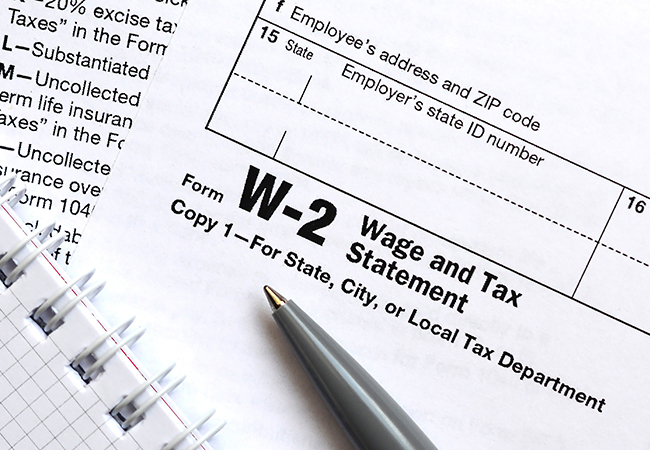
A W2 form, officially titled the Wage and Tax Statement, is the IRS form employers use to report wages paid to employees and the taxes withheld from those wages. The W2 is issued once per year and summarizes everything the employee earned and paid in taxes.
How a W2 Works
Employers complete a W2 for each employee at the end of the calendar year. The form reports gross wages, federal income tax withholding, Social Security and Medicare taxes, state and local taxes, and certain benefits. Employees use the W2 to file their personal tax returns.
What a W2 Reports
- Total wages, tips, and other compensation
- Federal income tax withheld
- Social Security wages and tax withheld
- Medicare wages and tax withheld
- State and local wage and tax data
- Retirement plan contributions
- Dependent care benefits
- Other reportable benefits
What Is a W9 Form?
A W9 form, officially titled the Request for Taxpayer Identification Number and Certification, is the IRS form used to collect taxpayer information from independent contractors, freelancers, and certain vendors. The W9 is not a tax return. It is a data-collection form.
How a W9 Works
Before paying a contractor, the business asks them to complete a W9. The form provides the contractor’s legal name, business name, address, taxpayer ID (SSN or EIN), and tax classification. The business uses this information to Issue a 1099-NEC at the end of the year if total payments to the contractor reach $600 or more.
What a W9 Reports
- Legal name and business name
- Business address
- Federal tax classification (sole proprietor, LLC, corporation, etc.)
- Taxpayer Identification Number (SSN or EIN)
- Certification of accuracy under penalty of perjury
- Backup withholding status
W2 vs W9: The Core Difference
The biggest difference between W2 and W9 is the working relationship. A W2 is for employees. A W9 is for independent contractors.
Key Structural Differences
- Worker type: W2 – employee. W9 – independent contractor.
- Purpose: W2 – year-end wage and tax report. W9 – contractor information collection.
- Who completes it: W2 – employer. W9 – contractor.
- Tax withholding: W2 – employer withholds. W9 – contractor pays own taxes.
- Year-end form: W2 – the W2 itself. W9 – leads to a 1099-NEC.
- Benefits eligibility: W2 – yes, typically. W9 – no.
W2 vs W9: Side-by-Side Comparison
Both forms deal with payment for work, but they create very different tax, legal, and operational responsibilities.
Quick Comparison
- Worker classification: W2 – employee. W9 – independent contractor.
- Employer tax burden: W2 – payroll taxes, unemployment, workers comp. W9 – no employer payroll taxes.
- Worker tax burden: W2 – employee pays 7.65% (Social Security + Medicare), employer matches. W9 – contractor pays full 15.3% self-employment tax.
- Control over work: W2 – employer controls how, when, where. W9 – contractor controls the work.
- Tools and equipment: W2 – employer provides. W9 – contractor provides.
- Year-end form: W2 – issued by employer. W9 – data used to issue 1099-NEC.
- Benefits eligibility: W2 – yes. W9 – no.
- Employment law protections: W2 – full coverage. W9 – very limited.
How to Know Which Form to Use
The form follows the working relationship, not the other way around. Worker classification determines which form applies.
Use a W2 If the Worker Is an Employee
- You control how, when, and where the work is done
- You provide tools, equipment, and training
- The work is ongoing rather than project-based
- You set the work schedule
- The worker performs core business functions
- You provide benefits or pay for time off
Use a W9 If the Worker Is an Independent Contractor
- The worker controls how the work is performed
- The worker provides their own tools and equipment
- The work is project-based or short-term
- The worker offers services to multiple clients
- The worker can profit or take a loss
- The worker sets their own schedule
If you’re unsure, the IRS offers Form SS-8 to request a worker classification determination.
The IRS Three-Factor Worker Classification Test
The IRS uses three categories of evidence to determine whether a worker is an employee or contractor.
1. Behavioral Control
- Does the business control how the work is done?
- Does it provide training, instructions, or evaluations?
2. Financial Control
- Who provides tools and equipment?
- Who covers expenses?
- Can the worker realize a profit or loss?
- Is the worker paid by the project or by salary/hourly?
3. Type of Relationship
- Is there a written contract?
- Are benefits provided?
- Is the relationship ongoing or project-based?
- Is the work part of the core business?
No single factor is decisive. The full picture determines classification.
How W2 and W9 Workers Are Taxed
Tax treatment is very different between W2 employees and W9 contractors.
W2 Employee Taxation
- Employer withholds federal income tax
- Employer and employee split Social Security and Medicare taxes (FICA)
- Employer pays federal unemployment tax (FUTA)
- Employer pays state unemployment tax (SUTA)
- Workers compensation premiums apply
- Employee receives a W2 at year-end
W9 Contractor Taxation
- No tax withholding by the business
- Contractor pays full self-employment tax (15.3%)
- Contractor makes quarterly estimated tax payments
- Contractor receives a 1099-NEC if payments meet IRS thresholds
- Business reports payments to the IRS but does not pay employer taxes
Common Mistakes Employers Make With W2 and W9
Most classification problems come from gray areas, not bad intent.
- Classifying long-term workers as contractors to avoid payroll taxes
- Using W9s for workers who function like employees
- Failing to collect W9s before issuing payment
- Not issuing 1099-NECs when payment thresholds are met
- Treating part-time workers as contractors by default
- Misclassifying remote workers because they work from home
- Inconsistent classification across similar roles
The Risks of Misclassifying Workers
Worker misclassification is one of the most expensive payroll mistakes a business can make.
Common Consequences
- Back payroll taxes for unpaid Social Security, Medicare, and unemployment
- IRS penalties and interest
- State agency fines
- Workers compensation back premiums
- Unpaid overtime under the Fair Labor Standards Act
- Back wages for missed benefits
- Lawsuits from misclassified workers
The IRS, Department of Labor, and state agencies all enforce classification rules, often through joint investigations.
How Businesses Use W2 and W9 Forms
Both forms play different roles in payroll, tax compliance, and recordkeeping.
How Businesses Use W2 Forms
- Report employee wages to the Social Security Administration
- Provide employees with their year-end wage statement
- Support payroll tax filings and reconciliations
- Document compensation for audits and lending
How Businesses Use W9 Forms
- Collect taxpayer information from contractors before payment
- Verify legal name and tax classification
- Determine if backup withholding applies
- Issue accurate 1099-NEC forms at year-end
If you want to evaluate how proper worker classification affects payroll costs, workers compensation exposure, and benefits eligibility for your workforce, this baseline tool can serve as a starting reference: https://peopaygo.com/get-rate-exchange-blogs/u/step-1.
Best Practices for Using W2 and W9 Forms Correctly
Strong classification and documentation protect the business from penalties and disputes.
- Apply IRS classification factors consistently across all workers
- Use a written contractor agreement for every 1099 worker
- Collect a signed W9 before issuing any contractor payment
- Run payroll for W2 employees through a reliable payroll system
- Track contractor payments throughout the year for 1099 reporting
- Audit classifications annually as roles evolve
- Document the reasoning behind each classification decision
- Use Form SS-8 if classification is unclear
Common Questions About W2 vs W9
A few practical scenarios help clarify common gray areas.
Can the Same Person Receive Both a W2 and a 1099?
Yes, in narrow circumstances. A person can be a W2 employee for one role and a contractor for unrelated work. The work must be clearly different in scope and structure. The IRS scrutinizes these situations closely.
Do Part-Time Workers Get a W2 or W9?
Part-time workers are usually W2 employees if the business controls their work. Working fewer hours does not change classification.
Do Remote Workers Get a W2 or W9?
Location does not determine classification. The factors of control, financial relationship, and ongoing engagement do.
Turning Worker Classification Into a Compliance Advantage
Getting W2 vs W9 right is more than a tax exercise. It is a core part of payroll compliance, risk management, and workforce strategy.
- Accurate classification protects against IRS and DOL penalties
- Strong W9 collection avoids backup withholding requirements
- Clean payroll records support audits, lending, and growth planning
- Clear contractor agreements protect intellectual property and deliverables
- Consistent classification reduces legal and reputational risk
- Aligning classification with payroll and benefits supports long-term workforce stability
This article is for informational purposes only and does not constitute legal, tax, or accounting advice. Employers and workers should consult a qualified attorney or CPA for guidance specific to their situation.
If you are planning workforce expansion and want to understand how payroll changes may affect insurance-related costs, you can use this optional planning tool as a reference: https://peopaygo.com/get-rate-exchange-blogs/u/step-1.
Ready to get worker classification right? Review your current W2 and W9 workers, audit how each role is structured, and align your payroll, contracts, and reporting with IRS and state requirements.